
The Limits to Green Growth: Re-Materialising Ireland’s Pathway to Net Zero
6th February 2026
A thing which is present can be invisible, hidden by what it shows.
– René Magritte, Belgian Surrealist painter (1898 – 1967)
Under the European Commission’s 2019 European Green Deal (EGD), the ‘twin green and digital transitions’ was formally adopted as the EU’s preferred pathway to Net Zero emissions by 2050. This new ‘technoscientific environmentalism’ rests on the promise that (future) technological innovation accompanied by a greater reliance on digitalisation and AI will ‘solve’ the climate crisis. Moreover, as the European Commission’s webpage on the EGD states, the benefits of the digital turn will not only be felt in the delivery of a “climate neutral continent” but also through the transformation of “the EU into a modern, resource-efficient and competitive economy”. We are told, “innovation, clean technology, and green infrastructure” will lead the way and enable “Europeans [to] enjoy cleaner air and more energy efficient products and homes.” In short, smart cities, smart buildings, smart cars and smart grids are the drivers of the greener, cleaner, and more sustainable future.
Presented thus, the environment and the digital are but natural allies, complementing and reinforcing each other: while the techno-digital will increase accuracy, speed and efficiency of climate-related data gathering and the transition to clean energy, the environment will provide limitless resources (such as the sun, wind, and minerals) to build and power a more sustainable digital architecture. Once ‘twinned’, the green and the digital will reinvent the economy through ‘green skills’, ‘green jobs’ and ‘resource efficiency’ leading to ‘green growth’. In this techno-utopic vision, the economy, the environment, and the techno-digital seamlessly and rather unproblematically coalesce to build our shared climate resilient future.
And yet, the data tell a different story. The Statistical Review of World Energy 2025 reported that despite the increase in wind and solar deployment outpacing global energy demand nine-fold in 2024, the consumption of fossil fuels reached the highest levels on record continuing to dominate the global energy mix at 87%, and global emissions increased by 1% last year reaching record levels for the second consecutive year at 40.8 GtCO2e (p. 4 & 12). More specifically, while oil remains the dominant energy source meeting 34% of global energy demand, natural gas registered a 2.5% increase in 2024, and coal, the dirtiest fossil fuel, registered a 1% increase in demand (p. 12).
What accounts for this seeming contradiction? As René Magritte’s quote above reminds us, we must ask the critical question of what (and who) remains invisible from such techno-solutionist approaches to environmental problems. Ironically, ‘we’ are turning the earth inside out through a staggering increase in extractive mining of ‘boutique’ and base energy minerals located in the backyards of ‘invisible’ communities in non-western countries. While at the other end of the supply chain, twin transition policies are ill-equipped to cope with the flood of waste that will be added to the fastest growing waste stream, e-waste, in the next decade. There is no magic ‘away’ where waste goes to die; it’s always in someone’s backyard. The only question is ‘whose’.
The Extractivist Logics of the ‘Twin Transition’
For the twin transition to ‘work’ in principle, we first need to build the critical infrastructure for the ‘green’ and ‘digital’ transitions. But this presents a problem because building the green and digital infrastructures requires mining unprecedented quantities of mineral and metal resources, and since the mining sector is energy-intensive and fossil fuels reliant, more mining means more emissions. Low-carbon energy technologies such as wind, solar, and Electric Vehicles (EVs) require vastly greater quantities of critical raw material (CRM) inputs. For instance, a typical EV requires 6 times the mineral inputs than a conventional car, and an onshore wind plant uses 9 times the mineral resources than a gas-fired plant. Since 2010, there has been a 50% increase in the amount of minerals needed for a new unit of power generation capacity due to renewable energy technologies. To put this into perspective, a pioneering study from 2021 led by Prof. Simon Michaux assessing the quantity of metals and minerals required for a global phase out of fossil fuels by 2050 revealed that the quantity of mineral resources required to build the first generation of renewable energy technologies far exceeds the total global mining production of the last 34 years! Given the material, infrastructure and time constraints, it is clear that the ‘twin transition’ will not be a guaranteed future for all.
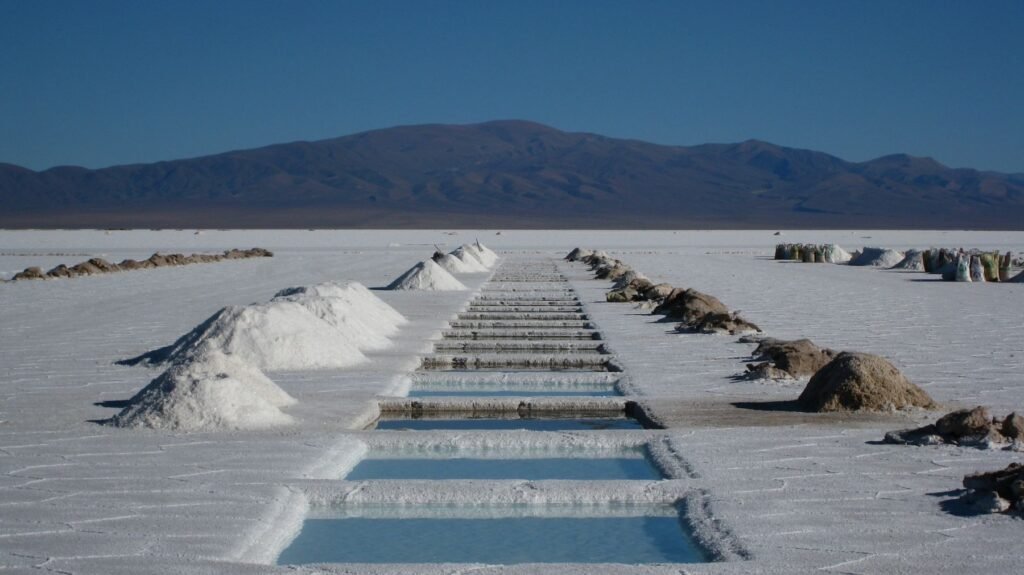
In addition to material constraints, the race for ‘transition minerals’ has been linked to armed conflict, rampant human rights abuses and severe environmental harms in mining regions. Extensive media coverage of such harms, from the violation of indigenous rights and ecological damage in the ‘Lithium Triangle’ of Argentina, Bolivia and Chile, to the hazardous working conditions, child labour and armed militias in DRC’s cobalt mining, and the poisoned mountains and communities of Myanmar due to toxic mining of heavy Rare Earth Elements, has turned the spotlight on the power asymmetries between the ‘green’ energy ambitions of wealthy nations and the ‘sustainable development’ dreams of resource-rich but economically weaker countries. Similarly, the extractivist logics that underpin digitalisation and AI have also given the lie to narratives of the ethereal and weightless Cloud.
Yet, as this Oxfam report reveals, European banks continue to finance mining companies linked to land grabs, pollution and human rights violations to the tune of nearly 8 billion euros annually. It is clear that the new green politics of power is built upon older colonial logics of limitless extraction from the ‘elsewheres’ of the world.
The need of the hour, then, is not ‘finding solutions’ that might do more harm than good. But instead, to go back to the beginning and ask the right questions because as Max Liboiron cautions us, how we pose problems determines what kind of solutions are foregrounded, and “it is the responsibility of researchers to engage with the problem”.
My research builds on Zora Kovacic and Lucía Argüelles’ compelling observation that “the two transitions [green and digital] entail opposite logics…[While] The green transition responds to a logic of limits…The digital transition is a transition away from limits and bottlenecks…” (2025: 1). In doing so, my research is geared towards interrogating the contradictions inherent in the techno-utopic ‘twin transition’ narrative that appear rather frequently once you begin to scratch the surface to reveal what lies beneath…
It is in this wider context that I read decarbonisation policies in Ireland and the UK critically by querying the gap between policy and practice as an entry point to make larger observations about the politics of climate and energy justice. I am guided by Tess Lea’s novel conceptual framing and methodological practice of what she calls “policy ecology”. In her book Wild Policy (2020), Lea defines “policy ecology” as “the ecology of policy environments” and the multiple “alive, inhabited worlds that policy emanates from and enters into…” (21). Approaching policy through the people, places, texts, histories, traditions, and institutions that populate it means it “is no longer a stable body of rational thought” (22) but in a constant feedback loop with daily existence, mutually affecting and affected.
The Irish Context
The case of Ireland perfectly exemplifieswhat Kovacic and Argüelles call “the opposite logics” of the twin transition. On the energy policy side, Ireland’s Climate Action and Low Carbon Development (Amendment) Act 2021 (or the Climate Act) aims to achieve the “transition to a climate resilient, biodiversity rich and climate neutral economy by no later than the end of the year 2050 and to thereby promote climate justice”. It also sets an interim target of achieving 51% reduction in emissions by 2030 compared to 2018 levels. At the same time, Ireland has embraced data centres as the road to prosperity and strategically lured BigTech investment into the country through tax incentives for tech giants like Google, Amazon, Microsoft, Meta, and Apple, making the tiny island-country the world’s third-largest market for hyperscale data centres. From 2023 to 2024, the electricity consumption of Irish data centres increased by 10% to account for 22% of the nation’s metered electricity in 2024 – greater than the electricity consumption of all urban households in the country which stood at 18%. Given data centres’ carbonivorous appetite for energy, in 2022, Dublin which is home to over a 100 data centres, issued a moratorium on new data centres till 2028 in order to ease pressure off its electricity grid. Contrary to the narrative of the ‘green’ and ‘digital’ transitions being complementary, Ireland’s digital economy is effectively standing in the way of its climate goals, exposing the oppositional logics by which the two transitions operate.
Despite progress in the development of wind and solar energy, 81% of Ireland’s primary energy needs in 2024 were met by fossil fuels, and natural gas still contributes 42% to the country’s electricity generation. The growth in electricity demand continues to outpace the development of renewables due to the rapid expansion in demand from data centres, and between 2017 and 2023, all additional wind energy generation in the country was absorbed by data centres. The development of renewables is therefore not delivering a net reduction in the use of fossil fuels. On the contrary, the Government now plans to support the opening of a new LNG terminal in Co. Kerry in opposition to its decarbonisation goals in a bid to meet the growing electricity demand of data centres. According to the Central Statistics Office, Ireland ranked second only to Luxembourg in greenhouse gas emissions per capita amongst the EU-27 countries in 2023, releasing 10.4 tonnes of CO2 equivalent compared with an EU average of 6.9 tonnes. As this article points out, AI is a boost for global oil demand rather than net zero.
Unsurprisingly then, recent data from Cornwall Insight reveals that “Ireland [is] on course to miss [its] 2030 power emissions targets by over 20 percentage points” due to “wasted and unused renewables”. In its Climate Action Plan 2023 and CAP 2024, Ireland set a target to reduce electricity emissions by 75% from 1990-2030, but is only going to reach a 50% reduction by the end of the decade. Similarly, a recent EPA Report states that Ireland is significantly off-track to meet its 2030 emissions reduction target and is now projected to reduce greenhouse gas emissions by only 9 to 23% instead of the mandated 51% by 2030. The additional demand pressure posed by data centres has exposed Ireland’s insufficient grid infrastructure forcing ‘curtailment’/ ‘dispatch down’ of wind power resulting in a fall in the share of electricity supplied by wind, which decreased by 3% from 2023 to 2024. As Ireland struggles to keep pace with growing data centre demand and pressure to meet its climate targets by electrifying heating and transport, it is experiencing one of the highest electricity prices in the EU, with the highest non-household electricity costs, and household rates 30% above the EU average.
Interestingly, the Energy Security in Ireland to 2030 states that “Good governance is a fundamental tenet of energy security”. And yet, as the Irish Government fast-tracks the building of domestic green energy infrastructure (GEI) to meet its clean energy targets for 2030, large-scale energy infrastructure projects, particularly the construction of large wind farms in rural communities have met with local opposition against the environmental, health, and socio-economic impacts of these mammoth turbines. This begs the question, ‘what counts as “good governance”?’ More specifically, how is “good” defined and by whom? And who is left out of such policy considerations? In a forthcoming move that will effectively silence community involvement and opposition to ‘green’ infrastructure projects, the Irish government is now set to introduce emergency legislation to fast-track key infrastructure projects aimed at “cutting red tape” from the planning process.
Through my research, I am interested in asking who is being placed at the frontlines of the new “green sacrifice zones” and in what ways? In their insightful article, Christos Zografos and Paul Robbins employ the term “green sacrifice zones” (GSZs) to mean “the places and populations” that are being sacrificed for “the sourcing, transportation, installation, and operation of solutions for powering low-carbon transitions, as well as end-of-life treatment of related material waste” (543). Zografos and Robbins go on to provide two key components of GSZs, which are “cost shifts” and “coloniality”. They define cost shifting as the “practice where private enterprises pass the harmful consequences and damages of economic production to third parties (within or outside the economic production circuit) and communities” (544), while “Coloniality is…a key colonial logic that can both encourage and justify the production of such sacrifice zones” (545). In this context, I study the local impacts of Ireland’s twin transitions framework through its alignment with progress on national Sustainable Development Goals (SDGs).The intersection between the two remains under-studied, though we know that Ireland recorded ‘significant challenges’ and ‘major challenges’ for 11 of the 17 SDGs, particularly on environmental targets. Of these 11, progress on ‘zero hunger’ (SDG 2), ‘clean water and sanitation’ (SDG 6), ‘climate action’ (SDG 13) and ‘life on land’ (SDG 15) is stagnating, while progress on ‘responsible consumption and production’ (SDG 12) is decreasing. Enabled by the policy ecology framework, I carry out an “ethnography of [green policy] interventions” (Lea 2020, p.19) by combining multi-directional with multi-scalar analysis (micro, meso, macro) using mixed methods to address green policy justice. My research contributes new knowledge by offering a comprehensive understanding of the ways in which ‘green colonialism’, defined as the offshoring of energy transition harms to Global South countries, not only rests on outsourcing harms but also crucially on turning them inwards. And finally, following Zografos and Robbins’ work, I pursue the question, ‘are Ireland’s green policies deepening inequalities, exacerbating poverty, and damaging biodiversity in misalignment with the SDGs?’ I address this question by examining the ‘cost shifts’ and ‘logic of coloniality’ underpinning Ireland’s twin transition.